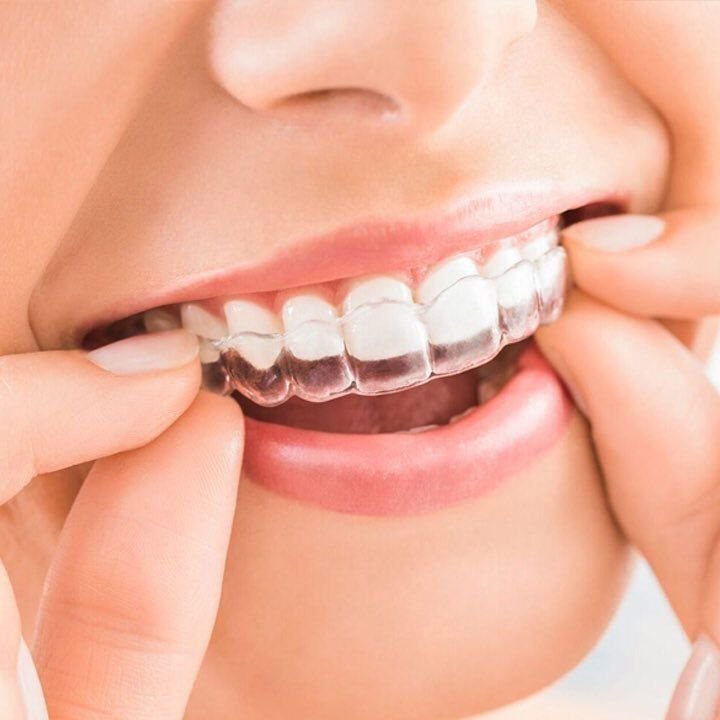
Clear braces are used in the treatment of spaced and crooked teeth. In addition, if a tooth is not in its correct position, orthodontic treatment with braces is applied. With braces, problems related to the position of the teeth are corrected over a certain period of time. In addition to traditional braces, there are now many different types available. Among these options, the most intriguing and increasingly popular type is clear braces.
Metal brackets move the teeth into the position determined by the orthodontist; however, because they may look less aesthetic, many people have started looking for more discreet alternatives. To address this concern, clear braces were developed. Performing the same function as metal brackets, clear braces have become increasingly widespread in recent years.
Types of Invisible Braces
Invisible braces are produced and used in three different types. These are known as lingual orthodontics, clear aligners, and clear brackets. The use of invisible braces has become quite common today. Let’s take a closer look at these three types.
Lingual Orthodontics
Unlike traditional braces, lingual orthodontics are attached to the inner surface of the teeth rather than the outer surface. In this way, the braces remain hidden and are highly practical. This orthodontic treatment is completely invisible from the outside, making it ideal for those who are uncomfortable with the visible appearance of braces.
Although lingual orthodontics offer significant advantages, they also have some disadvantages. These include:
- Since the tongue constantly touches the inner surface of the teeth, it may cause irritation or sores on the tongue.
- The treatment duration is generally longer compared to other types of braces. For example, while traditional braces may correct tooth alignment within one year, lingual orthodontics may require up to 1.5 years to achieve similar results.
- They can be up to three times more expensive than traditional braces.
Because lingual orthodontics were introduced before clear aligner treatment, they were once the most popular invisible orthodontic option. However, after the introduction of clear aligners, their popularity decreased due to these disadvantages.
Clear Aligners
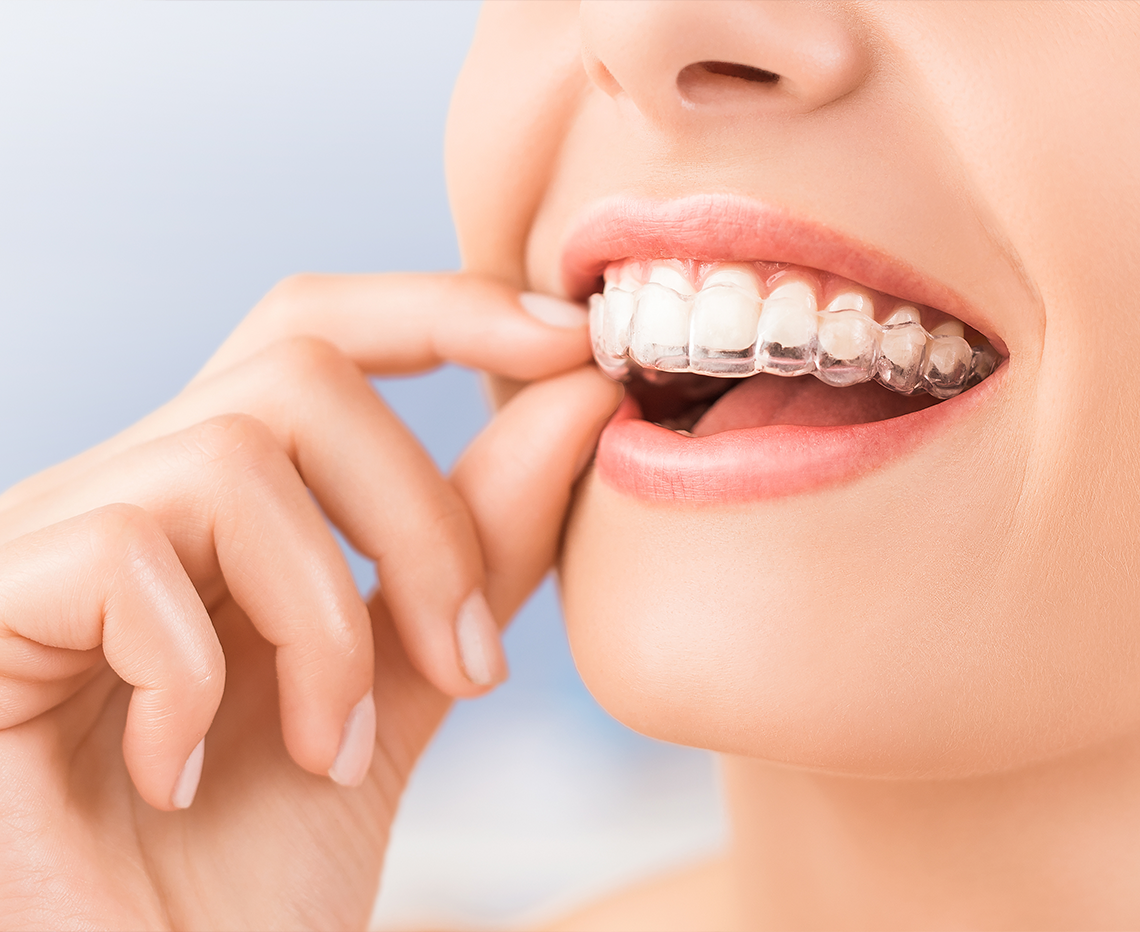
Clear aligners are among the most preferred invisible orthodontic treatments due to their comfort and minimal visibility compared to other options. Unlike traditional braces, clear aligners can be removed and reinserted. While individuals with traditional braces may avoid certain foods that could damage or get stuck in their braces, those using clear aligners can simply remove them while eating and enjoy their meals more comfortably. Additionally, because they are transparent, they are almost completely unnoticeable from the outside.
Like lingual orthodontics, clear aligners also have some disadvantages. One of the main limitations is that they may not be suitable for correcting certain complex dental issues. The effectiveness of the treatment depends largely on how long the patient wears the aligners during the day. Therefore, it is not always possible to provide an exact treatment timeline. Clear aligners should be worn for at least 20 hours per day for optimal results.
Clear Brackets
Clear brackets are made of porcelain or ceramic materials, which provide a more aesthetic appearance from the outside. However, compared to metal brackets, they are more delicate and can be damaged more easily. These braces are designed to match the natural color of the teeth to create a more pleasing look. Ceramic braces are often made from a glass-like material, allowing the teeth to remain visible while still achieving a more attractive appearance.
When designed with full attention to aesthetics, these braces will not stain as long as proper care is maintained. Additionally, the elastic bands used to hold the wire in place are designed to be transparent or white. When all these features come together, they provide a highly aesthetic result. To reduce costs, some clear braces may be made from hard plastic instead of porcelain or ceramic; however, plastic braces are generally not equivalent in quality or durability to ceramic or porcelain options.
Clear braces have several defining features. These are clearly outlined in the list below. Being informed about these features before starting treatment will be beneficial for you.
- Although clear braces made of porcelain or ceramic were once considered fragile, advancements in durability have significantly strengthened them. Today, they offer durability that is nearly equivalent to metal brackets.
- Even though porcelain or ceramic braces are durable, the same precautions applied to metal braces also apply to them. Clear braces can still be damaged by hard or sticky foods.
- Individuals with an active lifestyle or those who participate in sports can use these braces; however, they should wear a protective mouthguard during sports activities to prevent damage to both the braces and the mouth.
How Are Braces Applied?
When people think of braces, metal braces usually come to mind. This is because metal braces often deliver effective results in a relatively shorter period and are more durable compared to newer alternatives. During the application of metal braces, oral health is first ensured. Then, braces are designed specifically according to the individual’s dental structure. After the mouth is opened using a device called a retractor, the brackets are bonded to the teeth using a special adhesive method. Additionally, colored elastic bands can be used to create a more personalized appearance.
How Are Clear Braces Applied?
Clear braces, also known as porcelain braces, are applied in a process very similar to metal braces. Most of the steps are the same, with the main difference being the more delicate nature of porcelain and ceramic materials. Therefore, extra care is taken during application. The procedure generally includes the following steps:
- Ensuring proper oral hygiene,
- Fixing the brackets onto the outer surface of the teeth using specially produced adhesives,
- Strengthening the adhesive using a light-curing process,
- Threading the archwire through the brackets,
- Completing the procedure with the necessary final checks.
Since traditional braces are often thought to create an undesirable appearance in daily life, the search for more aesthetic alternatives led to the development of clear braces. In recent years, they have become highly preferred. Because they are close to the natural tooth color and transparent, they are not easily noticeable from the outside. If you are considering orthodontic treatment, you may prefer clear braces. When performed by an experienced specialist, the procedure is safe and effective.
IMPORTANT CONSIDERATIONS AFTER GETTING CLEAR BRACES
Great care must be taken during and after clear braces treatment. Most of the precautions are similar to those required for metal braces, as clear braces function in almost the same way. The only difference lies in the material used—metal in one case, porcelain or ceramic in the other.
First and foremost, individuals with braces should pay at least twice as much attention to oral hygiene compared to those without braces. Additionally, sticky substances such as chewing gum should be strictly avoided, as they can adhere to the braces and be difficult to remove. Another important point to consider is that individuals who participate in sports should wear a protective mouthguard during physical activities.